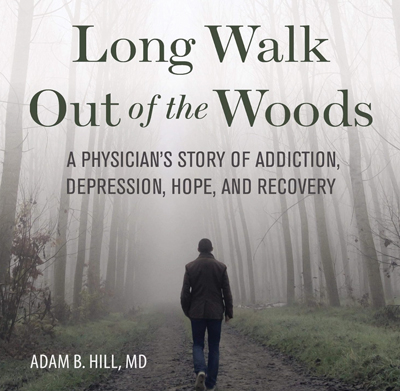
There was a time when Adam Hill, MD, believed asking for help would cost him everything.
As a young physician, he battled depression and addiction while desperately trying to maintain the image that medicine often rewards: capable, resilient and unshakable. In his memoir,
Long Walk Out of the Woods, Dr. Hill recounts reaching a point where hope seemed impossible to find. What ultimately changed his life wasn’t a single breakthrough moment, but the willingness to take one honest step toward recovery.
More than a decade later, that journey has become the foundation of his life’s work.
When Dr. Hill delivers the keynote address at the
2026 ISMA Physician Wellness Symposium, he’ll bring more than clinical expertise. He’ll offer physicians something many rarely receive during training: permission to acknowledge struggle. For Dr. Hill, recovery came when he started attending AA meetings.
“The substances are the symptoms,” Dr. Hill said. “The beauty of 12-step recovery programs is they teach you how to live life on life’s terms…how to live a better life.”
That distinction lies at the heart of both Dr. Hill’s memoir and his message. Recovery isn’t simply about eliminating destructive behaviors. It’s about creating a life that no longer requires them. For Dr. Hill, his book came from a realization that he had to lead and do more after a physician friend died by suicide. He acknowledged that his experience might save others.
One of the strongest themes emerging from Dr. Hill’s work today is that physician wellness cannot be reduced to another institutional initiative or employee benefit. Culture changes when leaders model healthy behaviors.
“If you don’t live it…it’s not going to mean anything,” Dr. Hill said. “We normalize that type of open dialogue about what I need and what my boundaries are.”
As a department leader, Dr. Hill encourages team members to attend their children’s school events, keep medical appointments and establish healthy boundaries without apology. Rather than viewing those choices as signs of diminished commitment, he believes they create stronger teams.
“We become a beacon,” he said. “People ask, ‘What is that team over there doing? Everybody seems pretty happy over there.’”
That philosophy echoes one of the messages woven throughout A Long Walk Out of the Woods: physicians often spend years caring for everyone except themselves. Dr. Hill argues that sustainable caregiving begins with recognizing that physicians are human beings before they are physicians. Perhaps the most surprising part of Hill’s story is that recovery hasn’t depended on extraordinary acts of determination. Instead, it’s been built through ordinary routines, repeated day after day.
Exercise nearly every day. Long-term treatment for depression. Regular psychotherapy. Accountability through Alcoholics Anonymous. Those habits, rather than dramatic moments, have sustained more than 12 years of sobriety.
Dr. Hill admitted he initially resisted participating in the physician monitoring program that required recovery meetings.
“I held resentment for that for the first year or so,” he said. “Then it became such a gift. Accountability and structure and routine were such a gift for me.”
From obligation to gratitude, that change illustrates another recurring lesson from his memoir: recovery rarely begins because someone wants help. More often, it begins because someone finally accepts it.
Dr. Hill and his wife openly discuss emotions, therapy, coping skills and recovery in ways previous generations often avoided with their three children.
“When you break those cycles…you don’t understand how it can impact the next generation,” Dr. Hill said.
Those comments resonated deeply because they reveal how recovery extends far beyond the individual. Healing changes marriages. It changes workplaces. It changes families.
In A Long Walk Out of the Woods, Hill writes honestly about shame and isolation. Today, he intentionally replaces those experiences with openness and connection, hoping his children and employees will grow believing that asking for help is simply part of living well.
One story Dr. Hill shared captures why recovery communities matter. He described a friend who desperately needed to attend an AA meeting but sat frozen in the parking lot, unable to walk inside. Finally, a woman knocked on his car window and simply asked, “You coming?”
He followed her inside.
Dr. Hill still becomes emotional telling the story because it reminds him how life-changing one small act of kindness can be.
The moment mirrors one of the defining themes of his memoir: hope often arrives quietly, through ordinary people willing to meet someone exactly where they are.
Dr. Hill’s presentation at the ISMA Physician Wellness Symposium won’t simply be about preventing burnout or improving resilience scores.
It’s about redefining success.
For too long, medicine has celebrated endurance while quietly discouraging vulnerability. Dr. Hill’s life suggests another path—one where strength is measured not by how much someone can carry alone, but by their willingness to reach for others when the load becomes too heavy.
Every attendee of the symposium will receive a complimentary copy of A Long Walk Out of the Woods. They’ll hear a physician whose story began in darkness but ultimately became one of hope.
His message is both simple and profound: healing doesn’t happen all at once.
It happens one honest conversation, one healthy habit and one courageous step at a time.
Reach out to ISMA’s
Physician Assistance Program on behalf of yourself or a colleague if you are in need of assistance with psychiatric, substance use or stress disorder. Physician Assistance Program was created to assist physicians experiencing difficulties in their personal or professional lives.