| |
|
 |
| |
|
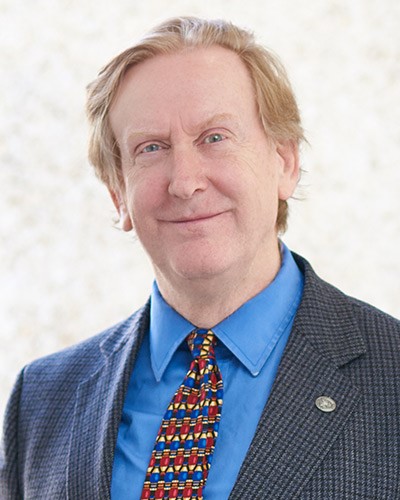
Richard Gunderman, MD, PhD
|
By Richard Gunderman, MD, PhD
ISMA President-elect
ISMA Wellness Steering Committee Chair
I have recently been able to ask hundreds of medical students and physicians around the state what sacrifices they have made for their career in medicine. The range of responses is wide, from forgoing income from other career paths and assuming massive educational debt to postponing marriage and childbearing. To put today’s sacrifices into a larger historical perspective, it is helpful to revisit some of those made by our predecessors several generations ago.
One notable example is Otis Bowen, MD, a family physician from Bremen, who served as a State Representative, Speaker of the House, Governor, and US Secretary of Health and Human Services. Today, Dr. Bowen is often remembered by physicians for promoting the groundbreaking Indiana Medical Malpractice Act of 1975, which curbed lawsuits, capped damage awards, and reduced insurance premiums, making Indiana a physician-friendly state.
In his memoir, Dr. Bowen reports that, as the son of a schoolteacher seeking to fund his college and medical school education, he “took every odd job that came my way.” He
- Hoed potatoes at 10 cents an hour
- Milked a cow morning and night for an elderly lady at 10 cents a day
- Built a chicken coop in a week, earning $5
- Shocked oats and wheat for $1 a day
- Mowed lawns, 15 cents for small ones and 25 cents for the rest
- Shined shoes in a barber shop on Saturday nights for 5 cents a pair
- Opened up a gas station at 6:30 am, earning a penny for each gallon pumped
When he arrived at the Bloomington campus of Indiana University, he brought with him a small suitcase containing a suit, two sweaters, two pairs of trousers, and a raincoat that doubled as his topcoat. He and his roommate lived in a bare room with two desks but only one bed, in which they both slept. Later, he lived in the home of an elderly lady whose furnace he fired, sidewalks he swept, and windows he washed to earn rent.
Dr. Bowen almost left college in his first weeks from homesickness. Fortunately, another student saw him feeling down and engaged him in conversation, which helped him feel less lonely. Even at his first visit home, he tried to persuade his dad that he should leave school and take a job in a Monticello factory, but his father was not convinced and insisted that he return to campus. Dr. Bowen was so strapped for cash that he budgeted 50 cents a day for food.
During the summer after his first year of college, Dr. Bowen worked on a Pulaski County dairy farm, rising at 3:45 am to milk twelve cows by hand, then cooling, bottling, and delivering the milk. He then helped make hay or plowed corn until the evening milking. Having joined the Delta Chi fraternity, he worked there as a waiter, learning to balance four plates at a time, two in one hand, one resting on the crook of his arm, and the other in the other hand.
Dr. Bowen was so poor that one year he saw his future wife, Beth, only twice, at Thanksgiving and Christmas, when he returned to Northern Indiana. During all his years in Bloomington, she visited him only once to attend his fraternity’s sweetheart dance. His financial difficulties were so great that only the addition of Beth’s small inheritance enabled him to stay in school. Later, they married, and he hitched a ride back to school after a one-night honeymoon.
Dr. Bowen was always on the lookout for ways to make money, one of which he discovered while transporting his copy of Gray’s Anatomy around campus. His mother had made him a denim bag, and when other students asked how to get one, he enlisted his mom to make more, selling them at $1.50 each. During the summer, he worked at the Sears and Roebuck garage in Gary, mounting new car tires.
The medical school fees of $200 per semester were simply too much for Dr. Bowen, and he was able to finish his studies only because he was appointed cadaver boy, which meant that he accepted and embalmed bodies sent to the medical school from prisons and mental institutions. He also made an outline of his histology course and sold it for $1 a copy. Yet Dr. Bowen wasn’t the poorest student. One, a minister, finished medical school only when colleagues took up a collection.
When Dr. Bowen moved to Indianapolis to continue his medical studies, he worked at the Wheeler Mission, where, after mandatory evening chapel, he would ensure that up to 50 men were stripped, showered, and, if necessary, treated for lice. Beth stayed back in Northern Indiana, working full-time. Later, he got a job at a funeral home, which enabled the couple to live together for the first time.
Twice, the funeral home director gave Dr. Bowen $5. Once was to take his wife out for a good dinner, and the other to buy a hat, because he didn’t have one. Later, after donating blood for a car dealer’s leukemia-stricken father, Dr. Bowen received a Model A Ford, which the couple referred to ever after as their “blood car.” He drove it to school each day, picking up three students, each of whom paid 5 cents a day.
Dr. Bowen’s financial struggles and modest lifestyle are only one dimension of the sacrifices he made to become a physician, and he went on to face many additional challenges, including military service in World War II. Yet the story of his straitened circumstances during his student days helps to place in perspective some of the sacrifices facing students and physicians today. When we compare the two, we realize that we have a great deal to be thankful for.