| |
|
 |
| |
|
Richard Gunderman, MD, PhD
|
By Richard Gunderman, MD, PhD
ISMA President-elect
ISMA Wellness Steering Committee Chair
Nearly 2,000 years ago, the great Roman orator and philosopher Cicero penned one of our most illuminating portraits of growing old, in which he wrote, “It is not by muscle, speed, or physical dexterity that great things are achieved, but by reflection, force of character, and judgment; in these qualities old age is not poorer but richer.”
What he meant us to understand is that those nearing the end of their careers have often gained insights that are difficult or impossible for younger colleagues to come by through experience alone. If we want to understand what turns out to be most important in a medical career, we would be wise to listen to those looking back on their own.
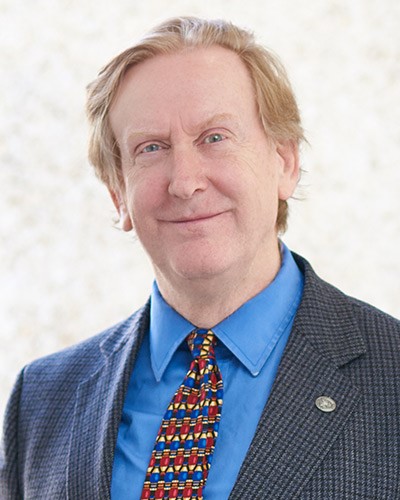
Consider, for example, ISMA past president David Diaz, MD, an alumnus of the Indiana University School of Medicine who has practiced psychiatry in this state since completing his residency here in 1989. In addition to his ISMA service, he has also served as president of the Indianapolis Medical Society and the Indiana Psychiatric Society.
Diaz is retiring from clinical practice late in 2026, and as he reflects on his career, he expresses immense gratitude for the opportunities that leadership positions have provided to promote such concerns as mental health parity, ethical care, and ensuring that the voices of the voiceless are heard by serving as their advocate.
One might think that someone who held so many leadership posts must have craved the limelight, but this was not so for Diaz. An introvert, he sought not to draw attention to himself but to advocate with clarity, lead with integrity, and serve with compassion. Whether in the consultation room, classroom, or boardroom, his has been a quiet form of leadership.
Much of his best work has taken place in quiet places, one-on-one with a patient, a colleague, a health care executive, or a legislator. Yet he has found that it is often in small groups of people that the deepest conversations take place, resulting in the highest degree of mutual understanding.
He recognizes that work can take a toll on a person, not only physically and emotionally but also spiritually. It is not easy to bear witness to suffering on a day-to-day basis, and this toll is compounded by other burdens – seeing how mental illness damages lives, how systems can fail us, and simply recognizing the limits of what we can do.
Diaz has learned that there is a significant difference between healing and simply fixing. This distinction contrasts sharply with the work of a skilled physician I once knew who seemed to see only the part of the patient that his specialty focused on, leading many of his patients to conclude he had not really seen or heard them.
Diaz, by contrast, has attempted to serve as a bridge between disciplines, ensuring that the health professions team sees the whole patient and situates its decision making in the larger context of the patient’s best interests. Often, this has required far more curiosity and patient listening than adherence to any guideline.
In over four decades of caring for patients, Diaz had come to see medicine not as a job but a calling, a perspective that no physician should take lightly. To refer to medicine as a calling means it is not something we can take or leave as we see fit, but a larger purpose to which we often need to subordinate our personal preferences.
Our mission, he says, is “to be a quiet presence in the lives of those who are navigating the unfamiliar terrain of afflictions of the mind and soul.” In this sense, medicine represents far more than a secure, well-paid job. “It is sacred work that requires us to pay attention, hold space for pain, and offer hope even when situations feel most hopeless.”
Psychiatry has taught Diaz that healing is about being as fully present as we can to even those for whom our therapies seem to have least to offer. It is about seeing ourselves in our patients and our patients in ourselves. It means thinking, feeling, and acting with humility. We are but parts of a larger whole that we are called to serve.
Diaz sums up his perspective on his career in this way: “The most enduring strength is often quiet. The most faithful work is often unseen. And the most meaningful careers and lives are assessed not by accolades, but by the depth of our compassion and the steadfastness of our care.”
To be well and thrive as physicians, we need to practice well and grow and develop in the care of patients, families, colleagues, and communities. Our elders have much to offer, the accumulated wisdom of a lifetime in medicine, and those of us with years or decades still ahead of us would do well to attend to their wisdom.